

Ultimate Unity Asset Guide: Free vs Paid Unity Assets, Templates & Game Source Code
Discover when to use free vs paid Unity assets, game templates, and source code. Save time, boost performance, and build better Unity games faster.
Ultimate Unity Asset Guide: Free vs Paid Unity Assets, Templates & Game Source Code
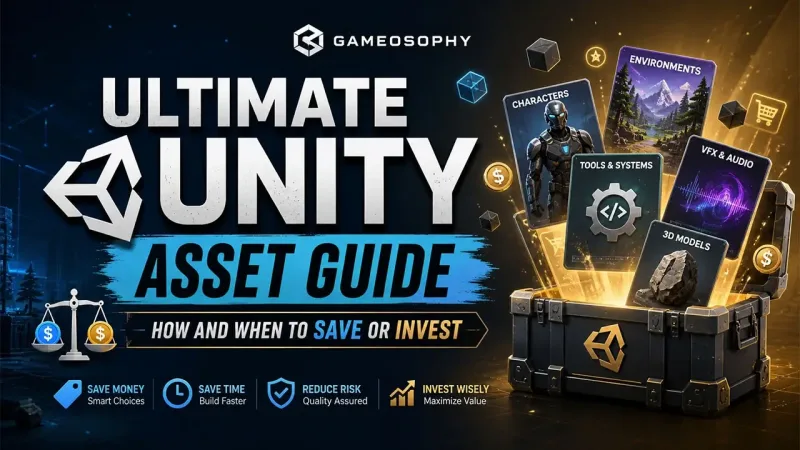
Ultimate Unity Asset Guide — How and When to Save or Invest in Unity Games, Templates & Assets
Introduction
Every Unity game developer faces the same challenge: building a high-quality game while managing a limited budget. Should you use free Unity assets, or invest in premium Unity game templates and assets?
Making the right choice doesn’t just save money—it directly impacts your game performance, development speed, and overall success.
If you’re planning to buy Unity game source code, templates, or assets, this guide will help you decide when to save and when to invest smartly.
What Are Unity Assets?
Unity assets are pre-built resources that speed up game development. These include:
- Unity game templates (complete game source code)
- C# scripts and systems
- 2D/3D models and animations
- UI kits and game icons
- Sound effects and music
- Shaders, VFX, and tools
Whether you're creating a mobile game, hyper-casual game, or AAA-style project, using the right Unity game assets can reduce development time significantly.
👉 Many developers now prefer to buy Unity game templates instead of building everything from scratch.
When Free Unity Assets Make Sense
1. Prototyping Your Game Idea
During early development, free Unity assets are perfect for testing gameplay mechanics.
If your game isn’t fun with basic shapes, expensive assets won’t fix it.
Best keywords used naturally:
free Unity assets, Unity prototyping, game development beginners
2. Learning Unity Game Development
If you're new to Unity, free assets help you:
- Understand game mechanics
- Learn scripting structure
- Experiment without financial risk
Perfect for students and indie developers exploring Unity game development tutorials.
3. Filling Minor Game Elements
Not everything in your game needs to be premium.
Use free assets for:
- Background props (rocks, trees, crates)
- Basic UI elements
- Simple particle effects
This keeps your budget focused on important features.
Why Paid Unity Assets & Templates Are Worth It
1. High-Quality Game Design & Optimization
Premium assets offer:
- Better visuals and polished design
- Optimized performance for mobile and PC
- Clean and scalable code
This is crucial if you're building a commercial Unity game.
2. Save Development Time (Huge ROI)
Time = Money.
Instead of spending weeks building systems, you can:
- Buy Unity game source code
- Use ready-made Unity templates
- Launch faster
Example:
A $30 asset saving 40+ hours = massive productivity gain.
3. Updates, Support & Scalability
Paid Unity assets usually include:
- Regular updates for latest Unity versions
- Documentation and tutorials
- Direct developer support
This is essential for long-term game maintenance.
Free vs Paid Unity Assets (Quick Comparison)
| Factor | Free Unity Assets | Paid Unity Assets |
|---|---|---|
| Cost | Free | $5 – $500+ |
| Quality | Inconsistent | High-quality |
| Best For | Learning & prototypes | Commercial games |
| Support | Community | Developer support |
| License | Limited/varies | Commercial-friendly |
Pro Tips for Unity Developers & Game Sellers
✔ Read Reviews Carefully
Check recent reviews to ensure compatibility with the latest Unity LTS version.
✔ Use a Hybrid Strategy
- Free assets → Background & filler
- Paid assets → Core gameplay, characters, systems
✔ Verify Licensing
Always confirm if assets allow commercial game publishing.
Final Thoughts
There’s no single rule for success in Unity game development.
👉 Start with free Unity assets to test your idea
👉 Upgrade to premium Unity templates and assets for polish and scalability
If you're serious about launching a successful game or selling games online, investing in high-quality Unity game source code and assets is the smartest move.
🚀 Looking for Ready-Made Unity Games?
At Gameosophy, we provide:
- 🎮 Unity game source code
- 📦 Ready-to-publish Unity game templates
- 🧩 Custom game development services
- ⚡ High-quality assets for fast deployment
Start building and launching your game faster today!